You get a single team handling cybersecurity, IT, and data integration services like EDI, filling the gaps in your team.


“Corsica is a one-stop shop for us. If I have a problem, I can go to my vCIO or a number of people, and you take care of it. That’s an investment in mutual success.”
– Greg Sopcak | Southern Michigan Bank & Trust
From 24/7 SOC services to MDR/SIEM, penetration testing and training, we’ve got you covered.
Get the expert support you need for your network, on-premises devices, VoiP, M365, Google Workplace, and everything in between.
Full support of compliance frameworks, including CJIS, HIPAA, CMMC, NIST, SOC 2, and more
Cut through the hype with smart strategies and right-fit AI solutions for your organization.
Take strategic steps with confidence as you collaborate with our expert business and vCIO consultants.
Get cloud security, integration, server virtualization, and optimization strategies to reduce your cloud costs.
Connect any data source to any other with robust solutions and managed services.
Stay ahead of the curve, eliminate waste, and grow revenue with next-generation technologies.
Expert consulting, implementation, integration, managed services, and cybersecurity for Microsoft products.
One program. One partner. Complete AI transformation.
It takes dedicated experience to use technology strategically in your industry. That’s why we specialize in certain verticals while offering comprehensive technology services.
From webinars and video tutorials to guides and blogs, we’ve got resources to help you and your team address any technology challenge.

 Brian Harmison
Key takeaways:
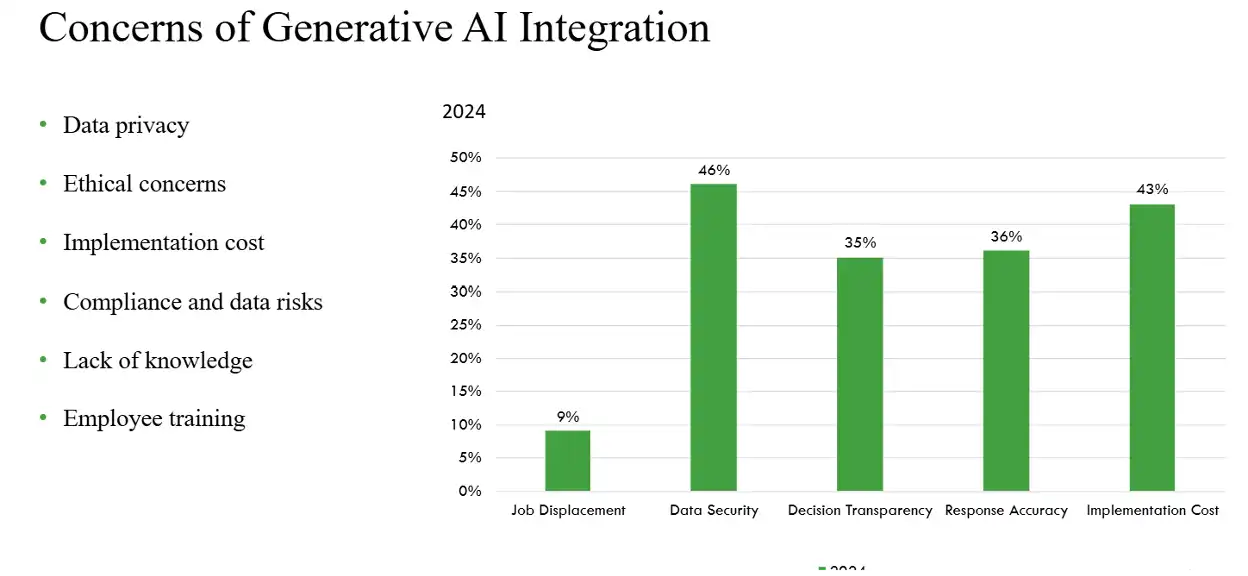
Good morning, everyone. Hope everyone's doing well today. Wanted to welcome everyone to our getting started with Smart AI, integration for business growth, webinar, and kinda just talk about, you know, how AI for for businesses is kind of shaping up and and sort of the trends in the industry, that we're we're seeing today. Today's webinar might be a little bit different. It's meant to be more, collaborative and and conversational than than our typical webinar. So please, we're gonna be posting polls in the chat, and please participate. If you have questions, please ask them. And we'll probably get things kicked off here with a poll, specifically speaking towards, you know, where your concerns are when it comes to generative AI. Again, today, we're gonna be covering a lot of ground, focusing on the difference between AI, generative AI, and how it may fit into your specific business model. We're gonna talk about real world or the practical implications in real world, you know, ROI from using AI. We'll be discussing the biggest challenges that business face when they are attempting to adopt AI, and, additionally, discussing how mid market companies can compete with enterprises when it comes to, AI investments. So, again, our goal here is to keep the conversation practical and focused on your business specifically. So please, you know, continue to provide feedback throughout. We'll try and answer questions as often as possible, and we'll also probably have a q and a session at the end if if time allows. I am joined today by two special guests, Brian Harmison, the CEO of Coursegood Technologies, as well as Peter Rodenhauser, the COO of Coursegood Technologies, both of whom bring quite a a wealth of experience and knowledge when it comes to the AI industry as they've helped, other organizations both define their AI strategy and build it out over time. So kind of with that, let's go ahead and let's just go ahead and dive in. You know, welcome, Brian and and Peter. Hey. Thanks, Gary. Yeah. Thanks, Gary. Yeah. Great great to be here. Excited about the the topic and the format. I I'm I'm, looking forward to some of the interactive questions and polls and sharing that live with, with the audience. Yeah. Yeah. Thanks. Thanks, Garrett. Yeah. No problem. It seems like we may have some some technical difficulties. Can everyone, hear us and see the the presentation? Alright. I will perfect. Sounds like we're we're doing okay. So we'll go ahead and, jump straight in. I guess the the first question, is for for you, Brian. What distinguishes a successful AI strategy from just mere interest? Yeah. Thanks. Thanks, Garrett. So, you know, first, let's let's maybe set a little bit of groundwork around, you know, when we talk about AI, you know, what what are we talking about today? And and for the most part, we're talking about the use of generative AI, within business or, you know, some AI automation. Most businesses we work with aren't, implementing custom language models and and building their own, AI, tools, but but are looking at how do we leverage the the tools in the marketplace, that that are are available and could possibly give us an advantage. And so, you know, as we think about what what does it take to have a a successful AI strategy, it it starts with understanding what where do we wanna go in in defining a a clear set of objectives. And, that comes down to to business problems. What what are our goals and what are we trying to to solve, within within the business, and and how do we plan to to to leverage these different tools for with with AI. So so the first is is really defining what those objectives are, and and and that can come from any number of of areas. We typically recommend, you know, starting with some of the the common, you know, more labor intensive areas of your business. Yeah. The second step is is really around, you know, determining, you know, the the readiness of of the data and and the information that that we wanna use, AI on. And that that's where we see most people get hung up as as they look at how to use AI in their in their business. Next step, how do we, you know, picking the right tools. So we as an organization have have made a lot of bets around the Microsoft ecosystem, specifically around Copilot. So that means how do we prepare our data, to leverage Copilot and the Microsoft tools. And and and the next is is pilot and test. How do we get into this iterative process of, using these tools to generate some automation within the the business and start to to see some return on investment for those. Yeah. That that makes a lot of sense. Thank you for kinda laying the groundwork on on, you know, exactly what we're gonna be covering today and, some of the basics around AI. Yep. Peter, do you have any comments? Anything else you'd like to add? No. I mean, I think I think that's a great introduction. I I think as as we continue to progress and and talk about AI, you know, you're you're gonna hear about, things like automation, or even, you know, generation of of ideas, content. And, you know, I I recently heard someone describe, you know, AI a little bit in into two categories in terms of popular implementations right now. One category being traditional AI and and the other being generative AI. And, you know, to draw an analogy, I would draw an analogy to, you know, a lot of, you know, a lot of businesses are are running their business on a series of of KPIs. Right? And and one set of KPIs might be lagging indicators, while while another set of of APIs might be, leading indicators. And, you know, when you think about traditional AI, you know, you can think about some some concepts of of really, you know, pattern recognition, essentially generating some some predictions. So it might be, you know, banks or institutions might use it for for fraud detection, or even, you know, recommendations. Whereas generative I AI, is, from a use case perspective, is is more about, you know, creating new content and and new data. So if you if we think about that conceptually as as we're continuing on here today, I think that'll help, frame the discussion a little bit of of some of those use cases and where they fit in to the various businesses. Yeah. That's that's that's great. I think if we wanna go ahead and move on to the the first slide, we can kind of, talk about the poll and where the poll aligns with, what we're seeing kind of, across the board in the industry. So it seems like go ahead, Brian. Yeah. I I was gonna jump in here, Garrett. I I think Yep. You know, this this aligns well with with what what we hear and and see out in the industry. You know, data security, data privacy, and compliance are are typically the number one concerns. More around that generative AI. And as Peter talked about then, the traditional AI that that tends to be more operate in a in a more static space. And it it's interesting that that, you know, no one here mentioned the the implementation costs or or ethical concerns. You know, job displacement is is something that that we hear talked about a lot, but we we don't actually find most most people aren't concerned generative AI is gonna replace their their job. I think the, the general workforce has encountered generative AI enough now to recognize it's a it's a force multiplier or efficiency, gain for them rather than a replacement for what they do. Peter, any any thoughts on that? No. I I would agree, and I I I know, I know Garrett at at one point a little bit later, you you wanted to talk about, you know, some of that that concept of job displacement and what companies can think about. So I won't, I won't get too far ahead of ourselves, but but definitely have some thoughts there. Yeah. For sure. Just as a a, you know, sort of data point, here's a a graph, that's been pulled from Lucidworks, referencing or illustrating really where the industry is kind of at in terms of concerns. So I think, you know, what we kinda saw in our own little poll, pretty closely aligns with, you know, what we're seeing in the industry minus the the implementation cost, which is where Brian was kind of, you know, hitting on. It's interesting that, you know, we don't see any any concerns in our poll. But, you know, kinda moving on from this, let's just go ahead and kinda dive, you know, straight into it, and really start discussing, AI for for business strategy and and how is that framed. So, Brian, I kinda let off with a a question earlier, but, you know, what distinguishes a successful AI strategy from mere interest? Yeah. Well, every everyone's interested. I I think that's a a pretty common theme that that we hear, whether it's in in the boardroom or, you know, the water cooler. It's AI is is the the main topic or main area as it relates specifically to the the technology as well. How do we how do we use it? How does it apply to my business? And so is is we as we kinda go back to, you know, those those steps that that I I talked about earlier, where where we we really need to start is, you know, with what we wanna accomplish. You know, we see businesses that that go and turn on Copilot. They don't really provide training, and, it's like the the next new shiny object. It gets used for a while, but it doesn't get turned into part of the DNA of of the way that business operates in in a way that produces a long term ROI. Mhmm. So intentionality is is a key part of that, gaining, buy in from from leadership, from the executive team. A couple years ago, we would have been talking about, you know, the the role of cybersecurity, and cybersecurity's gotta start with the leadership of the company. And and AI adoption, has to has to start at the same place. There has to be buy in from the leadership team that this is an area that we wanna invest in and we wanna grow. So the the first the first couple parts of a successful strategy are get the buy in, identify the right problems to solve, and then start start putting some process in place to, to start to roll that out without trying to take too big of a bite all at once. Mhmm. Yeah. I I think that's that's well said, Brian. And just to, you know, piggyback off of some of the concepts that you laid out, you know, mere interest, I think we sell I've seen we've seen a lot of interest over the past couple of years as organizations have been really experimenting with AI to better understand it and and gain some knowledge in in the process. That doesn't mean they weren't weren't being, you know, strategic with it or have strategic intent. When I think of strategic intent, you know, the activities that are taking place have to be mapped back to a business objective. So maybe a year ago or two years ago, the business objective was identify research and identify how AI can be leveraged within our business to drive cost savings. And maybe that experimentation has been completed, and now we're on the phase two. You know, now, you know, our AI strategy is going to be more specific, more pointed, towards programs and projects that are mapped to, you know, specific, maybe cost savings objectives or or even, you know, if it's tied to sales, could be, you know, market expansion opportunities, but always mapped back to specific business objectives. And and that's that's really the difference between purely, you know, having interest and and playing in the sandbox versus having meaningful, implementations of some of these technologies. Yeah. That that makes a lot of sense. And and, Peter, who is there a natural, leader within the organization? I mean, you kinda listed off a few different sort of departments that may use it in different ways. Is there typically a natural, spot where, you know, AI thought leadership comes from or somebody who owns that typically, you know, in the day to day, strategy? Yeah. I mean, I'm you know, I I think it depends a little bit on the culture of of each organization. I'm I'm a firm believer that, you know, whoever owns the, you know, the business objective, the you'd really own the the implementation of, you know, the project that needs to be completed with the support, of, you know if if marketing owns the the, you know, I'll say the, the implementation of whatever the the AI technology being deployed is, they're gonna need support from from IT. But I think making a blanket statement such as IT owns AI strategy or, you know, the program management office owns AI strategy. I I don't know that that is the best approach. I think you always wanna map it back to, you know, the department or the group that is really trying to drive the the objective and make sure that you have the support then supporting functions, of those that that are needed. But but IT plays an absolutely critical role. I think for the past two years, IT's role has been around really educating the the business and the business units on what some of the capabilities are. And I I think that is as critical a role as as any in in the process, and and now we're in a position to be able to support the various implementations to meet some of those objectives. Brian, I don't know what your thoughts are. Yeah. I I I agree. Peter, you touched on something I wanted to to to get in as well, which is, you know, education is such an important part of understanding, you know, the difference between, am I just automating a task and am I making something more efficient versus is this an area where I can really gain some insight, and some efficiency through the the use of of a AI and and specifically generative AI, which tends to be, you know, much more creative, much more flexible, able to operate on on unstructured data versus, you know, traditional AI that that's, much more structured in in the way that it operates. So educating the the the different organizations parts in a way that that allow them to engage with the IT, in in really a problem solving exercise that, AI may be the answer to you, but but it's not always the answer to you. That that's helpful. And when you know, we're we're talking about different departments maybe using AI in in different ways and there being different leaders who may be, you know, leading the charge for their specific teams or, you know, their initiatives. How do you, effectively measure the ROI of these AI initiatives? Yeah. I it it comes down to cost savings. And the the reason Mhmm. AI is so exciting, you know, we'll we'll use it in the in the boardroom is, you know, it sounds like an opportunity to do more with less cost. And that's the the part of AI that that catches the eye of investors, that that certainly catches the eye of business leaders. And it's understanding, you know, that's why objectives are so important. What are the problems we're trying to solve? What's the value of those problems? And then what's the savings of of an implementation that that we're able to roll out? Uh-oh. Peter, I can't hear you. Yeah. Apologies. I think that's spot on, Brian. And I do think there's a natural tendency, especially when we talk about AI, especially through even an IT lens, to look first and foremost at at cost savings. I do think there's tremendous opportunity and businesses are seeing tremendous opportunity in it fueling growth opportunities. Mhmm. So when you think about the ability to mine the data or or track some of the patterns of existing customer behavior and identify where there may be an opportunity for an existing customer to further leverage a service or a capability that they didn't know about or we didn't even know, you know, maybe a a fit at at a given time. You know, introducing some of those ideas and capabilities, is very powerful. And now we're talking about the other side of the equation, which is which is growth. Now you can also map that back a little bit to to cost savings because we're having, you know, we're having technology identify those opportunities instead of maybe some of the traditional business development representatives. But, you know, that's another that's another use case and opportunity where, you know, I think we're going to see more and more adoption of AI. Yeah. I'd I'd add to that. You you know, customer engagement and experience is another area of ROI that, isn't necessarily cost savings related, but but can be reputational in nature. So improving response time to to customer service requests, and, you know, I I think we've likely all encountered some AI based chat or other, customer service engagement. So, you know, there there's there's a level of client satisfaction or or customer satisfaction as well that they can be measured in terms of things, you know, like customer satisfaction and and even even things like that promoter score. Yeah. Yeah. That that that's interesting. So we've talked about ROI and, you know, how we maybe measure the ROI, but I think that kind of leads into another question specifically regarding, you know, maybe the size of the organization that you're in because, obviously, a small, you know, SMB type client versus an enterprise client may have different ways of measuring the ROI and may have different ways of, you know, leveraging AI in general. Are there any are there any common or unique challenges that a an SMB client, for instance, versus an enterprise client might might have when implementing AI? Brian, you wanna go first? Sure. Alright. Well, they're they're just two very different use cases. An enterprise client, you know, could have the opportunity to to make some investment in building, building some some AI capability around something very specific to their business, and investing in in building, you know, a a language model and some AI capabilities that, could take some time to adopt and it would be very specific to to their business case. And and the the small to to mid market areas, we what we typically see is is organizations leveraging, you know, more off the shelf technology. I mentioned Copilot before, but but all the mainstream ERP systems, EMR, you know, line of business apps are investing in AI, technology to drive better insights, to drive, more engagement, easier customization of their systems. And that's that's where we see a lot of the the engagement on the small to mid sized business. Yeah. I I think, you know and and my advice to small, businesses in in particular is is stay patient, because, what we are seeing is that the enterprises and and the higher end of of the middle market are are really and this isn't uncommon in in new technology rollouts, but but they are the the bleeding edge of these these implementations. And, you know, you can look no further than Microsoft Copilot when it was rolled out. Of course, it was rolled out to to some of their their larger enterprise clients. But but even look at the pricing model. You know, since it first rolled out, now Copilot has, you know, become a a standard part of, you know, some subscriptions. So I think even the pricing aspect of it, showing a little bit of patience, for those those smaller customers will will pay off, because I think a lot of these capabilities we're talking about will be native capabilities as as a part of a core subscription to a a software, service platform. So instead of having other way to What's that about? Well, I'd I just add to that. You you know, this is not an area where, you know, the cost conscious, customer is on the bleeding edge. This is an area where, you know, we we wanna watch, we wanna adopt as those things become available and and they've been vetted. The the areas where that might be different is is if you can identify competitive advantage. So I think of a of a manufacturer that's able to to provide better inventory management for their specific product. Well, there could be cases where where it's worth for your particular, business case investing some to to be more on the bleeding edge because you can see that clear ROI. If this if if that's not there, then by all means, you know, adopt it as as it becomes commercially available. Yep. And, you know, Brian, something you mentioned on, or or or spoke about was, you know, EMR systems, and and I wanted to tie it back to a question that came in. And and thanks, John, for submitting this question. His question was, you know, what are our thoughts on AI uses in the health care software world? And, you know, this is an area where, you know, I think there's no shortage of opportunity, within health care, but the big concern, in in health care is, you know, around a lot of the ethical use of of the data. So, you know, Brian, I know this scenario, you know, that you have a lot of passion about. Maybe you can talk a little bit about that. Yeah. So so, you know, we haven't talked about some of the pitfalls yet, and and certainly one of them is, you know, biases that that AI can can introduce. And, you know, there are opportunities with without question to look for trends, to identify patterns using AI. When it comes to, you know, the the health care software specifically, and and clinical care, it's really critical that that a human stays in that loop of interacting with what's being produced by by AI, I I think is you know, I I certainly want my family members cared for by by a person, and and not through AI. Because the the biases that that can come from the way those models are trained, the data that's available to them can be very incomplete, and can be lacking in in that human experience experience that that we count on for, you know, some judgment in those more difficult situations. So there there's the ethical concerns around how do we provide, you know, the right patient care clinically. Also, how do we protect that data and and make sure we know where that AI processing is happening so so that we don't send patient data, to to an environment that that doesn't have the right protections in place. Yeah. And I I think the practicality of of what we are seeing in health care, space is it's been a little bit of a slower rollout because of, you know, some of those natural concerns. Now that said, you know, we are we are seeing and observing some of the the largest, you know, providers identify areas where where where they can take advantage of Technologies know, I saw recently the Cleveland Clinic, signed on with an AI provider to start implementing, AI based note taking, for, you know, physicians and nurses. What a great practical example that is. Right? I mean, we already know that the accuracy of of the note taking that's happening in the health care, industry is inaccurate to begin with. But, naturally, there's a lot of concerns of, you know, introducing, you know, the AI specific, you know, technology and models into that and making sure that the the data itself is private. So, yeah, plenty of opportunity there. Yeah. And and, you know, I'd I'd I'd add to that where where AI is providing a ton of value in the medical field now is is really around research and clinical studies and analyzing the the data and looking for, you know, those insights and patterns. They're not tied to to kinda critical clinical care within, you know, a a ongoing, patient or or case. It it's it's much more around how do we research, expand our research, gain better insights from clinical trials, develop better medications, that can then be tested. That's where, you know, AI adoption is is really you know, as Peter mentioned it, and some of the larger research organizations like the Cleveland Clinic, Mayo Clinic, and and others, they're leveraging these these very high powered AI engines to to help them expand and and grow their research faster. Yep. And this is so cool, the interactive questions coming in. So we we got a question from from Fred, probably keying off of some of what we said. And, you know, he's asking, how do we ensure high levels of of accuracies and answers within applications of AI? Great question. You know, one of the beauties of of generative AI, and, of course, a lot of this is dependent on the software applications themselves and and including this. But, you know, the the applications should be asking for for feedback, and and it is truly a a feedback loop to continue to teach, the the engine itself for for accuracy. So so no different than if you're, you know, leveraging, chat GPT. You know, you type in your question and, you know, it it's it's asking you, for, you know, accuracy of of the response and and feedback. So it's that it's that constant feedback and and and teaching of the engine itself, where results will improve. Brian, anything you would add to that? Yeah. It it it it comes down to AI is is a great tool to expand our capability to to do a lot of work quickly. It doesn't replace our judgment or that human in the loop. And the feedback is, as Peter mentioned, is so so critical. So as we think about the way to use specifically generative AI within a business, you know, it can help you draft that document more quickly. It doesn't it doesn't mean that that what it's drafted, is is going to be, you know, what you should go and and submit, but but it can get that start much more quickly. And and those things come in handy with with things like contracts, contract review. Again, we shouldn't count on AI to to be our our legal advice for us, but it's much easier to to provide a legal professional or a lawyer a a starting point than it is to ask them to generate that for us. And the same is true whether it's, maybe it's it's content, around a presentation or a new way to think about some data that we've been looking at. And so ensuring high levels of of accuracy, it it comes down to how do we ensure high level of accuracy within the the people that we work with. Well, we have to provide them with good data. We have to provide them with good feedback. We have to stay engaged with the output that they're producing in order to get to that high quality result. The same is true for AI. Yeah. I I think we started off the call or the webinar kind of talking more about Copilot or referencing Copilot, you know, quite often. But, Peter, you bring up chat GPT, and I think, Brian, you kinda touched on it as well. So, obviously, that's sort of a an open source free tool, that you can go and and kind of use day to day. So how do we prevent, you know, the unauthorized access of, you know, ChatGPT, maybe some of these other ones that continue to come out day, you know, day by day from becoming a a security risk? Yeah. So so there's some some really great tools that that provide, you know, visibility for that. And and the first is, you know, we recommend always starting with with an assessment of of the the security posture of an environment just just in in the beginning because we have to know what what controls and tools are in place. The second part of that is is looking at leveraging tools like Microsoft Purview and and the tools that it has available in order to, manage the access and and the exfiltration of data through tools like ChatGPT. It's very easy to grab a screenshot of confidential information and throw it into ChatGPT and ask it for insights. Where did that come from confidential information go? Preventing those types of behaviors falls on the the security and compliance teams within the company. And so, it there's gotta be a a policy on how it's used, and there has to be some tool based oversight on how it's used. Peter, anything that you might add? No. I I think Brian covered it well. It really does start though at the top with with a policy and and having the buy in, and support of the executive team of of any organization, supporting that policy. That's good. So kinda wanna maybe pivot a little bit and and talk more about workforce because we we hear every day, you know, people are afraid that they're gonna lose their jobs because AI is gonna, you know, take it over. So, you know, my I guess my question is, what sort of steps can organizations, you know, go through to really foster that, you know, AI forward culture or AI acceptance culture, and really make sure that their employees are bought in and, you know, everybody's on board and they understand that, you know, they're not going to lose their job. Yeah. So, you know, in thinking about this, Garrett, you know, I was drawing some some parallels to, we do a lot of work in the data integration space, and and we support a lot of companies with, EDI, specifically in business to business interactions. And, you know, when a lot of companies are are are implementing EDI, they are looking to introduce efficiencies. And and there's a, you know, there's a a common concern of, oh, you know, we're we're trying to put, you know, all of our customer service reps, you know, out of jobs by automating this task of of processing these orders or or turning around invoices, shipment notices, whatever it might be. And that's that's really not what it is. Right? In in that case, it's about, yes, introducing efficiency, really improving accuracy, and better leveraging the talent and and the knowledge that those individuals have about the company in more productive roles. It's the same thing when when we're talking about AI. You know, we are looking to, yes, introduce efficiencies depending on, you know, what the what the business objectives are. Brian mentioned earlier, around the the client experience. You know, we can be more efficient with those requests that that are coming in and tailoring the responses or even the research that's happening, you know, behind the scenes. But, you know, it's it's really about leveraging the knowledge that those individuals have about the business and putting that knowledge to to better use. And there is a bit of of retraining, that that has to happen. And, you know, the retraining is, you know, how do I think differently about my day to day activities? How can I leverage tools, rather than, you know, go through my my eight steps that are that are my typical eight steps? So I think that's the biggest shift that and that that I see is is that change in mentality of of retraining ourselves. You know? And and it's all I mean, it's not any one role. I mean, this this holds true for an executive. This holds true for a frontline worker. How can we better leverage technology, in our our day to day jobs and and activities? And and that's the key ingredient in in my opinion. Yeah. I I I agree with what what Peter said. I I I view the adoption of of AI as as the opportunity to do less of the the things that provide lower value in the in the job or the role that someone has and operate more efficiency, higher output. That's that's the case that that we see. I I I definitely have not yet seen a a client, you know, replace a a human role with with an AI solution. I've seen I've seen those use cases where it enhances the throughput of an individual, improves the the quality of of their work experience as well. That's interesting. So in that same sort of context or in that that same mindset, you know, are there certain skills that we're seeing that, you know, it would be beneficial for employees to, you know, grow or, you know, work on and, specifically as it relates to the AI forward companies. You know, anything that's gonna help them kind of, you know, step into a a company that might be more AI focused or have some of those things implemented. Yeah. I that that's a that's a really good question, Garrett. I I think the the main the main areas to to look at are staying engaged with, AI and generative AI tools outside of your your day to day job. You know, this is much like, you know, any area of professional development. A a lot of that comes through our own research, our own passions, the things that that we're interested in and invest our time in. And so find ways to leverage AI in, in in the hobbies that you have and the things that you do outside of the office. And that's going to expand the way you view the use of AI and and give you new ideas, as you interact with with the folks you work with. Yeah. I think, you know, if if you listen to Brian's response it's functional skills, not technical skills. Right. Mhmm. It's it's how we can we leverage the the tools and some of the use cases, not the the bits and bytes of it, that that frankly, the the technology companies that are developing the technology need need to focus on. Yep. Fair enough. Looks like we have another question there. Yeah. Yeah. I was gonna bring that up. We have a question from John in the chat. How are AI solutions priced outside of implementation and setup? Are they subscriptions, yearly maintenance? What's that look like? It oh, almost all are subscriptions. I I mean, I think we recognize that the successful software companies today are focused on recurring subscription, models, and and that also provides access to the the latest and greatest. And, you know, take your generative AI tool, GenuityPT, as an example. All of them have subscriptions that give you access to the latest and greatest. The same is is true within the ERP and EMR systems that we're seeing, subscription add ons. It is an opportunity for them to to upsell some capability. I think to Peter's point, there are opportunities to be patient and recognize that those tools that you may pay extra for today are going to become a key part of, a key part of those products down the road. Yeah. The other thing I would add is is I I would set an expectation. I I I believe that, you know, what we will also see in the next few years are, maybe maybe some of the the platforms, the cloud platforms that have been around for a little while, to to be able to leverage or take advantage of AI, you may have to, you know, upgrade to their their newer version of of the platform. And that really just speaks to them, you know, probably in investing in new technology, from the ground up and and being able to leverage this. But, you know, I would see that as, you know, as one model and the other is just a straight on bolt on subscription. Yeah. One one thing I'd add that that hasn't fully worked out in in kind of the SaaS, the the software as a service space is how the cost of implementing AI and the usage of AI within their tools and subscriptions will be passed on to to us as consumers of those SaaS applications. AI can actually carry a a much heavier cost for a an organization that, you know, traditionally might have had pretty low internal maintenance of that software. Now they may be paying a transaction fee. They may be paying a license fee for that that those AI capabilities. They're gonna find a way to pass those on to us, as the users of those applications. So, you know, that's an area to be on the lookout Corsica if you consume a lot of SaaS applications. There are those that that believe we're gonna see a, you know, potentially quite a bit of price increase within those those hosted applications that are adopting AI now. Yeah. And I think you both are are kinda moving into sort of, what I'll call my final topic, which is, you know, what's coming in the future. And you've already kinda talked about what we're expecting to see kind of in the next few years. But, you know, I've got one, I think, final question. And, Peter, we can kinda start with you. But is it too late for companies that haven't already started on their AI journey? It's never too late. Never too late. What's the what's the saying? You know? The the best time to plant a tree was twenty years ago, but the next best day is, you know, today. So, no, I I don't I don't think it is. I I'll go back to my comment. I I I also think that, you know, each company is is gonna be a little bit different in their journey, and there are there are organizations that it it may pay off to to be patient. What I would suggest, is, you know, if if organizations don't have a pilot, you know, program in place or or even really thought about it, you know, engage, engage with some organizations that that have, whether it be a service provider, whether it be a peer organization. And I'm I'm sure, you know, most organizations are doing that, but, you know, definitely pick pick the brains to better understand, what's being done out there and, you know, be be thoughtful of of how an AI strategy can map back to, you know, some of the key business objectives. Yeah. Another area that's that's definitely coming is is, you know, regulation and and certainly we can expect some, additional oversight on AI, specifically generative AI and its its use cases within specific industries we touched on medical earlier. You know, there are some some missed, you know, AI risk mitigation frameworks available now. That we expect to to see an increase in and and much like we have GDPR and and other privacy based regulations, we're we're certainly going to see more of those. So, you know, that's that's another place that that whether it's a a legal partner or a Technologies partner can help, stay ahead of those those trends, within within, you know, the use of AI in your business, especially if you're in any kind of a regulated or or privacy based industry. Yeah. That makes sense. Appreciate, you guys' this feedback on that. We do have another question in the chat from from John. Brian, I will, you know, direct this towards you. But any insight or use cases of AI and blockchain tech? Yeah. I I mean, there's there's potentially a lot. Whether it's it's security, you know, identity verification, You know, there's there's also, you know, a lot of opportunities, to to use AI around, you know, crypto investments too. You know, it's it's a a little outside of, you know, where where we're really focused today, but, there are, there are certainly opportunities for that, within within blockchain and and certainly crypto as well. Alright. I think that concludes our our questions in the q and a. Wanted to just take a minute and say, you know, thank you everyone for joining, you know, taking time out of your day, spending it with us, and and kind of talking through AI, you know, for your business specifically and, you know, just some general trends that we're seeing in the industry. Hope this was, you know, valuable to you, and hope you all have a great rest of your day. Thanks, Garrett. You, Brian and Peter. Thanks, Garrett.
As you develop your AI strategy framework, you’ll encounter these important terms:
When developing your AI strategy, it’s important to distinguish between RPA and AI:
RPA (robotic process automation) automates repetitive tasks based on clearly-defined rules. It’s not autonomous but highly programmed.
Consider this example:


Download 7 bite-sized case studies now.
A services business faces complexity in terms of customer requirements, service delivery, cost management, and strategic consulting with clients. There’s a lot of data to wade through, and it can be hard to see the forest with so many trees.
AI is a huge help here. The right AI tool can aid greatly in business intelligence consulting, empowering the organization to understand customers better and respond to shifting trends in demand.


It’s important to choose an AI strategy consultant who can help you evaluate these tools against their specific use cases to identify the optimal solutions for their business needs. A vendor-neutral approach ensures you get recommendations based on your requirements, not sales quotas.
AI cyber attacks are on the rise. Criminals are leveraging advanced technologies, and leading organizations are fighting fire with fire.
When choosing a SOC (Security Operations Center) provider, it’s important to look for one that actively evaluates and updates its toolset to stay ahead of emerging threats. The right partner will leverage advanced AI capabilities to enhance cybersecurity while maintaining efficiency and effectiveness.
While specific tools may not be publicly disclosed for security reasons, a strong SOC provider will use powerful, AI-driven solutions to deliver continuous, 24/7/365 protection.
Learn more about AI tools for SOC here: How AI Is Changing the Modern SOC Forever

You could approach AI implementation by hiring experts or leveraging existing team members’ expertise. If your staff has the necessary experience and bandwidth, this approach can work well. However, most IT teams are already stretched thin, and developing an effective AI strategy requires dedicated time and focus.
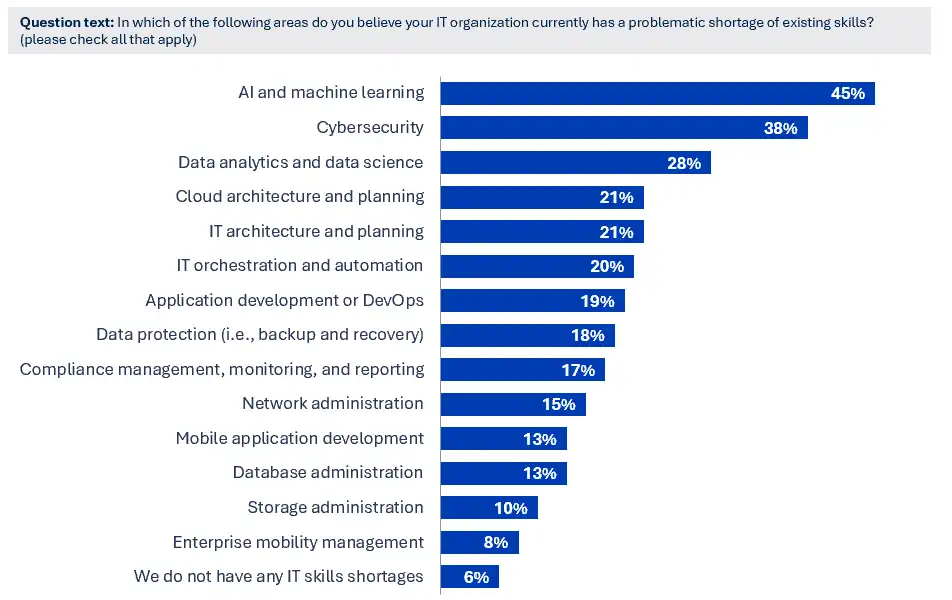
While using internal staff for AI implementation is possible, it depends on finding, hiring, and retaining AI experts who can dedicate sufficient time to your initiatives.
This is why many organizations partner with top AI consulting firms to develop and implement their AI strategy. Expert partners like Corsica Technologies bring the bandwidth and experience to evaluate your operations, challenges, and AI opportunities.
We work collaboratively with your team, transferring knowledge throughout the process to build internal capabilities while delivering immediate results. Our approach combines technical expertise with business acumen to ensure your AI initiatives drive measurable value.


I'm Nate Troyer. I am an Engineer and Account Executive at Corsica Technologies. And I'm here today talking with Wes DeKoninck. You almost had without saying it. Yeah. I can see it in your eyes. I'll let you take it. Sure. I'm Wes DeKoninck. I'm the Director of Digital Transformation here at Corsica. Yeah. And we're here to talk more about AI. So, you know, we have Wes here today, to kinda discuss how you really get started down the road of, implementing AI in your organization because AI is a buzzword, and it's pretty cool. Yep. Now, and we've had some other podcasts discussing, you know, products like Copilot or the difference between, like, a ChatGPT and Copilot and, what that can offer, like, at least at the executive level, what it can what can be offered there. But, like, if I'm an executive, I'm like, alright. Well, so it makes, you know, administrative work easier. But how do I really, like, start implementing that? I mean, do I- Do I buy new? Do I let a guy like Nate, build something from scratch? Yeah. So where does that entry point really start? Yeah. And it's it's a really common question that I'm getting from clients when they say cool. AI is everywhere. Microsoft has AI. You know, do I go buy the thing? Do I just start using it? Do I hire someone to tell me how to use it, you know, how do we really get started with this? And I think buying something and trying or just building something and trying are probably not the right approaches. I think trying, then buying is the right approach. So in general, I try to take a framework approach to it where you wanna look for your AI people in your business. So your AI evangelists are out there in your business. Your early adopter type of individual. Those, people exist around your organization, and they're all over it, you need to go find them, and you need to pull them together, and then you need to have a conversation because there are free tools available, and you set them to task and say, hey, guys. Take these free tools. Here are your guardrails, which you and Brian have talked about, you know, in other areas. Please don't put you know, personal information or things like about our clients into ChatGPT. Exactly. So but there's there's a structured way to go about testing out these tools without putting your secret information out there, you know, to make it part of the public domain. So you find these evangelists, you set them to task with, hey, explore take what you do every day, find the mundane task, interact with these tools. Here are some possible use cases, but explore and experiment. So find the individuals let them experiment and then analyze those findings. And then you kinda come up with a list of things that, hey, these things were actually impacted positively by AI. And again, at this point, there's no cost because you're using free tools. Right? Yeah. Yeah. So you refine those use cases. And once you have that, you actually have people to evangelize AI. So you're gonna get good adoption of the tool, and people will use it and get the benefits. You have no cost virtually other than time and experimentation. And you have a plan. That's something you can take to your primary stakeholders or your business owners and say, Hey, here is the business case for AI. And here are the costs involved. Here are the tools that we're using. What do you guys think? Yeah. Rather than just spending the money and hoping it works out in the end. Yeah. This is where you don't want someone like me, you know, like, like running the show because- Right. I've never met an engineer who could well, I guess I have. I've met a couple, but they're like unicorns that can sell the business use case for something. They're usually thinking, like, man, this makes my life easier, and we need it. But I can't really articulate it past that. So Yeah. And it's very specific to what they're doing. You have to think this tool has broad use cases in every organization. Yep. Whether you're trying to draft an email or a document, marketing material, need help with coding, like across the organization- creating a PowerShell script- Creating a PowerShell script. So there are so many things that you can do with it. The problem is because there's so many things, because there's so many tools, and there's a lot of newness to this whole thing, people just don't know where to begin. And really, you have to just begin. Yep. You try some things. You get in there. You see what works, and what doesn't work. And you start to write that stuff down and talk about it with the people at your organization, and that's how you're gonna ultimately have success. And you can do all that prior to investing in any technology. So where so, you know, where does where does the what are the examples that you can give of some of the, of some of the integration with AI that that is like the low hanging fruit. The what the the the where you can just start using AI and try it. Which ones have you come across? So a lot of the use cases are mostly with content generation that we're seeing. So, I mean, that's really the big buzz that's out there right now. It's right. Oh, it'll help you write an email and create a proposal. It'll help you analyze documents and things like that. So, you know, getting it to understand what you need to interact with from a data standpoint is kind of difficult if you really wanna dive deep, but that's what I would view as a later stage in AI adoption. Mhmm. The early stage is, help me make this document better. Or I'm writing an email to the CEO about a thing. I don't want it to sound like me. I want it to sound professional. Can you help me with this? So they're using it to modify content that they're generating. They're using it to do things like this podcast. Like, if they wanted to start something like this, they can lower the barrier of entry by saying, give me some topics that we can talk about because I'm having writer's block, or I'm not super creative. So they're helping people with creativity. So, you know, I'd say clerical tasks, document generation, you know, creative tasks, like marketing design, things like that. It's really helping those types of individuals without any additional effort. Beyond those use cases, you're looking to help me code better, help me solve this problem, help me understand this data. That will require a deeper level of integration because the AI needs the context of the information. It needs to be grounded in what details and data you wanna talk to. So what is the what is, like, from an engineering standpoint? What is the engineer's involvement in this is there any, like, training that has to happen to the AI? Is there any coaching that you need to do- Yeah. Or is that like an organizational-wide thing if you're if you're bringing in people from different parts of the org, can they all participate in training the AI? Yeah. They all can, and they all can have their own use cases and experiments. If you're really wanting to go beyond that, you will need engineer involvement, or again, it's just gonna depend on your data set. So if you're talking about all of the data that you have inside of Microsoft What's a data set? What's a data set, types of data? So where so, you know, where does where does the what are the examples that you can give of some of the, of some of the integration with AI that that is like the low hanging fruit. The what the the the where you can just start using AI and try it. Which ones have you come across? So a lot of the use cases are mostly with content generation that we're seeing. So, I mean, that's really the big buzz that's out there right now. It's right. Oh, it'll help you write an email and create a proposal. It'll help you analyze documents and things like that. So, you know, getting it to understand what you need to interact with from a data standpoint is kind of difficult if you really wanna dive deep, but that's what I would view as a later stage in AI adoption. Mhmm. The early stages help me make this document better. Or I'm writing an email to the CEO about a thing. I don't want it to sound like me. I want it to sound professional. Can you help me with this? So they're they're using it to modify content that they're generating. They're using it to do things like this podcast. Like, if they wanted to start something like this, they could lower the barrier of entry by saying, give me some topics that we can talk about because I'm having a writer's blocker. I'm not super creative. So they're helping people with creativity. So, you know, I'd say clerical tasks, document generation, you know, creative tasks, like marketing design, things like that. It's really helping those types of individuals without any additional effort. Beyond those use cases, you're looking to help me code better, help me solve this problem, help me understand this data, That will require will require a deeper level of integration because the AI needs the context of the information. It needs to be grounded in what details and data you wanna talk to. So what is the what is, like, the from an engineering standpoint? What is the engineer's involvement in this is there any, like, training that has to happen to the AI? Is there any coaching that you need to do Yeah. Or is that like an organizational-wide thing if you're if you're bringing in people from different parts of the org, can they all participate in training the AI. Yeah. They all can, and they all can have their use cases and experiments. If you're really wanting to go beyond that, you will need engineer involvement, or again, it's just gonna depend on your data set. So if you're talking about all of the data that you have inside of Microsoft What's a data set? What's a data set, types of data? So, you know, let's think customer data, client, invoices, you know, agreements, systems that they use, the types of different programs that they have, they have data. So data set would be a type of of data. Okay. So you're given the you're given the AI context. Yeah. Exactly. You're saying go, go use that information and find out this thing about it. Okay. You're telling it what to do and where to go, and it does it. Now, if it doesn't have access, and again, for this trial and error type of thing, it's not gonna have access to the secret sauce of your company. So it may not be able to perform those in-depth tasks. With Microsoft Copilot for three sixty-five, you can turn that on for select users, and it will have your tenant-wide data. But again, guardrails, make sure it's secure. I got my license, and it's so awesome. It is cool. It's great. I've used it for various things that I didn't even think I would. I've used it mostly to ask, like, Can you please give me the HR documentation on what is allowed to be said in the office? I use that all the time. All the time. Yes. And it shows. We've seen a drastic improvement. Yes. We really have. Anyway, so, from, like, an advanced standpoint, when you start when you start getting, getting past the, oh, it helps me make the document better or or whatever. Make those menial tasks, you know, a little easier, to you know, execute every day. Right. Are we seeing companies adopt the, AI in a form of like, like, reporting to use it in reporting and things like that? Yeah. A lot of them are, but these are larger organizations usually because, you know if we come back to what is the engineer's role here? It's about taking that data and getting it into a system that the AI can interact with. So that does require integration of sorts that has to allow the AI to say, hey, you can go talk to that system now. So when I ask you a question about my customers, tell me who my most active customer is. It needs to know what's a customer. Where do I find data about this customer? So you have to train the AI through the use of config duration and other tools, to say, when I say I wanna know something about a customer, you need to go there to look for it. Don't just start searching the web, I ask about a customer, go to my CRM. When I ask about invoicing go to my finance system. When I ask about analysis for profit and loss, I want you to go to my other account system. So you have to tell the, yeah, when when you understand that I want this thing, and this is what this means, here's where you go to get your data to be able to pass that to me. Interesting. So that could so, you know, AI is not really doing magic. Right? Well, the AI we're talking about is not really doing a lot of magic. It's it's finding similarities between data points. Right? Like, it's making connections. Yes. Absolutely. But those connections can be pretty powerful. Right? Oh, absolutely. They can help you plan out your company's, you know, next quarter, two quarters, next year, you know, about what you wanna do. So what has your team been, like, been doing with AI recently? You can give me some sanitized examples. So, we have been using it a lot for coding to expedite what we're doing from a code-based perspective. Right? So it's like, you know, I could spend all day troubleshooting this issue, but if I say, hey, you know, Get Hub Copilot, here's my code, here's my application. Here's what it's supposed to do. Why doesn't this work? You know? Yeah. And it could say, well, this is supposed to be doing this, and you have a problem right here, and you're like, oh, I didn't even think about that. Or, or I'm stuck, can you tell me about this plugin or the best thing I should be using for this? It helps expedite that. It's not solving the problem for you. It's not coding for you. It provides you with the path forward. It's helping you get unstuck and move forward. So You still have to know. Like, I mean, six months ago, I had I think, somebody from our service desk, you know, ask me for a Powershell script to do x because he thought I had it. Like, and I just you know, five minutes with Chad GPT, asked it a couple of questions. I gave it some guardrails. I kept scoping in what I needed it to do. And I handed him a PowerShell script. He's like, that's amazing. Like, how did you do that so quickly? And you just point your head. Right? That's it. I said it was all me. It's all me, buddy. Yeah. No. No. I said, that actually is ChatGPT. You still have to know what you're trying to accomplish and you try to know what, what solution it's providing, and maybe what outcome it's providing too. So you have to test everything that it gives you, and you can't just blindly follow. But it was remarkably accurate. Yeah. You know, it was like eighty-five, ninety percent of the way there. Right. And all I had to do was fill in the last ten percent. So, you know, it it's it's it's fun to use it in those ways. Yes. Because you're like, man. So I just cut out two hours of time, you know, writing this PowerShell script, dealing with ice, you know, this is just from an engineering standpoint. Right? Right. Imagine what it could do for someone in the c suite who essentially needs to have, like bullet points provided to them for what their next steps are on an email chain that's like three miles long. Right? Yeah. That's great. Or say if you're, like, in a law firm or something like that and you're doing, you know, a case prep, Right? I mean, if you had all that data and a data lake somewhere like in m three sixty-five and you ask Copilot, give me, you know, give me the high points of this case, you know, that I need to be, you know, focusing on and let it do that. Yeah. That's incredible. And then you go verify and follow on with that information. Yeah. Yeah. So expediting those tasks, that's one of the things that we're using it for. In code or things like that for all of our systems and internally and for clients. Another thing we're working on is just interacting with sentiments. So trying to understand, like, clients say, I, hey, I need the thing. I wanna do a thing. Creating very specific chatbots that are backed by these. And this is one of the biggest benefits I would say of the large, large language model AI is just giving you the ability to talk to computers as a per where before AI kind of blew up, it was I needed an engineer to talk to computers and data. I told the engineer what my outcome was, Right? Here's what I want to achieve. And engineers, like, let me think about that. Okay. Here's how I'll go about doing that. They'll build an application. They'll write a query. They'll do a thing. And they'll come back with the data you need. Right? Well, the big benefit of AI in the large language model era is, hey, computer. I wanna do this. Can you figure this out for me? Yeah. And the computer goes and goes, I understand what you wanna do, and here's the data I need. I'm gonna figure this out for you. So it's giving more individuals the ability to have that conversation with data and technology through the use of this model that just can understand humans. So that's one of the biggest benefits of it. It's kind of abstract, but it's really the power that lies behind this, not the fact that I can go get a report or something that could have been done. I could have done that through an engineer, but it gives virtually anyone access, and the ability to talk to that computer. The computer just needs to know what its rules are. Yeah. It's a really interesting concept. Really, it's kind of nebulous because you don't know what you can do with AI until you start trying until you do it with AI. Yeah. Until you do it with AI, and you're like, oh my goodness. I I prepped for a a meeting the other day. And asked a couple of questions about the cultural background that one of the people I was talking to was gonna be a part was a part of. And it's a little different than the Western American culture. And I said, like, what, how, you know, just give me some ideas about how the, how, you know, where their mindset be, and, and, you know, like, what they value, and, like, it was, it was interesting the information it spat out to me. Yeah. And You know, it it worked. I, you know, I kind of carried myself a little differently in that conversation. Given that context. Yeah. Given that context. So, Yeah. It's good. Yeah. It's a it's an awesome, space to be working in. I appreciate you having this conversation with us. I am really interested to see, what a conversation with you would look like in about six months down the road. And see and check in with you to see about more. Yeah. We're we're just crack music's open because again, you can do so much with it. It just becomes what can I do with it? What should I do with it, what makes the most sense? And again, just like most people out there, this is new. Right? This is new technology. They don't know. Well, It's new for us too in the technology industry. We're just seeing how we can interact with it and what makes sense because you can do things with it. That doesn't mean you should. You know, it's not the right answer for everything, but I think that's where the power is because we can do so many things, we can try so many things. Right? Yeah. And so we're just getting the going. And I think the important thing is, as well, it's great to experiment and try to understand how it benefits your organization, if you do it responsibly, it can have a ridiculous impact. Very quick You know? So having guardrails, having guidance is important in this process. And if you don't feel like, you know, what you're doing, get a consultant you know, we're here. Have a conversation with people who understand technology, understand businesses, and how to marry those two things together. And we want businesses to thrive. Absolutely. Yep. So Yeah. That's all we got. Thank you for watching Unraveling IT.

Contact us today to start your transformation.

We’ll respond within 1 business day, or you can grab time on our calendar.