You get a single team handling cybersecurity, IT, and data integration services like EDI, filling the gaps in your team.


“Corsica is a one-stop shop for us. If I have a problem, I can go to my vCIO or a number of people, and you take care of it. That’s an investment in mutual success.”
– Greg Sopcak | Southern Michigan Bank & Trust
From 24/7 SOC services to MDR/SIEM, penetration testing and training, we’ve got you covered.
Get the expert support you need for your network, on-premises devices, VoiP, M365, Google Workplace, and everything in between.
Full support of compliance frameworks, including CJIS, HIPAA, CMMC, NIST, SOC 2, and more
Cut through the hype with smart strategies and right-fit AI solutions for your organization.
Take strategic steps with confidence as you collaborate with our expert business and vCIO consultants.
Get cloud security, integration, server virtualization, and optimization strategies to reduce your cloud costs.
Connect any data source to any other with robust solutions and managed services.
Stay ahead of the curve, eliminate waste, and grow revenue with next-generation technologies.
Expert consulting, implementation, integration, managed services, and cybersecurity for Microsoft products.
One program. One partner. Complete AI transformation.
It takes dedicated experience to use technology strategically in your industry. That’s why we specialize in certain verticals while offering comprehensive technology services.
From webinars and video tutorials to guides and blogs, we’ve got resources to help you and your team address any technology challenge.

 Ross Filipek
The recent cyberattack on Stryker, a leading manufacturer of medical equipment, offers a sobering window into the vulnerabilities that companies tolerate every day. As I commented in eSecurity Planet, the attack also raises concerns not only about data exfiltration, but about the ongoing operation of critical systems.
What exactly happened in the Stryker cyberattack?
How can companies protect themselves from similar attack strategies?
Here’s everything you need to know.
Key takeaways:
Beginning on March 11, 2026, global medical manufacturer Stryker experienced a widespread, devastating cyberattack within their Microsoft environment. Devices and systems, including servers, were wiped clean, locking out employees around the globe. Stryker medical devices were not affected, but the company experienced a significant disruption to their operations. As of this writing, Stryker has not fully recovered, although they have contained the incident.
A pro-Palestinian, Iran-backed hacktivist group called Handala claimed responsibility for the Stryker cyberattack. Experts believe Handala has ties to Iran’s Ministry of Intelligence and Security, which would make this a nation-state attack against a private company.
While the FBI has since seized Handala’s website, and Handala’s statement is no longer available, Bleeping Computer quoted the statement before the site was taken down. “In this operation, over 200,000 systems, servers, and mobile devices have been wiped and 50 terabytes of critical data have been extracted,” Handala said. “Stryker’s offices in 79 countries have been forced to shut down.”
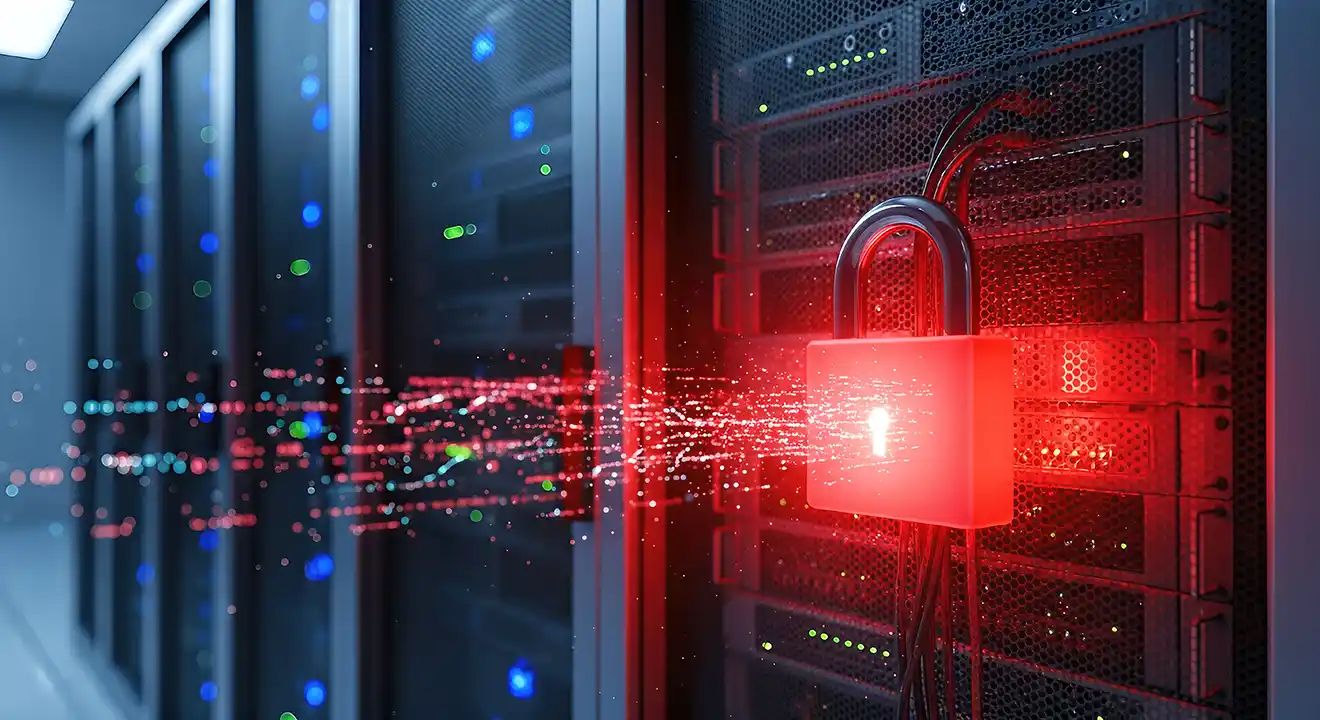
It appears that the Iran-backed cyberterrorist group Handala used a “living off the land” (LOTL) strategy to infiltrate Stryker’s Microsoft environment without detection. This strategy involves gaining access to the environment, often through stolen or compromised credentials, then blending in by carrying out normal activities. Attackers don’t install malicious files; rather, they bide their time, planning to use trusted tools to carry out the attack. Since there’s no malware to detect, basic cybersecurity monitoring may provide little warning of an imminent LOTL attack.
In this case, Handala compromised an admin account in Stryker’s own MDM (mobile device management) platform, then used that account to wipe approximately 200,000 managed devices such as laptops and workstations. The group literally took the platform that was meant to administer Stryker’s devices and used it to wipe them.
As of this writing, Stryker has contained the attack, but the company has not fully recovered in terms of operations, employee access to devices, or system uptime. While active Stryker medical devices were not directly affected by the attack, the disruption to Stryker’s operations will likely have a widespread impact on the medical supply chain for many months to come.
Here are the primary impacts that we expect to see in the global medical supply chain.
The Stryker cyberattack serves as a warning to companies in all verticals. It’s a reminder that geopolitical conflict can create an environment in which cyberterrorists target private companies as retaliation against military action.
Companies should also take note of the attack vector here. The terrorists didn’t install malware. Rather, they likely used compromised credentials to gain access to Stryker’s Microsoft environment. Without robust monitoring of privileged accounts for anomalous behavior, the attack went undetected. Once the terrorists had access, they exploited the MDM platform to wipe approximately 200,000 managed devices.

Handala appears to have used a basic strategy to infiltrate the company’s MDM platform without detection. However, companies can implement specific cybersecurity processes, controls, and monitoring to protect themselves from this type of attack.
Here’s what it takes to prevent a Stryker-style attack.
The attack hinged on the compromise of admin-level credentials in Microsoft Entra ID and Intune, which gave hackers the ability to wipe devices globally using legitimate tools.
Preventative controls include:
If an admin account can wipe 200,000 devices, it must be protected like critical infrastructure—not like a normal user login.
Attackers weaponized Stryker’s MDM functionality in their Intune environment, effectively turning Intune into a global kill switch.
Preventative controls include:
Organizations should treat their MDM platform as a Tier-0 asset, on par with domain controllers and identity stores.
At Stryker, personal phones enrolled via BYOD were also wiped, amplifying business and employee impact.
Preventative controls include:
This reduces blast radius even if administrative access is compromised.
The attackers avoided using traditional malware, instead issuing valid administrative commands that looked legitimate until damage was done. However, there were likely signs that the activity was anomalous.
Preventative controls include:
Detection must focus on intent and scale, not just known threats.
The attackers likely used stolen credentials to enable initial access. They may have harvested these credentials well before the attack.
Preventative controls include:
Credential hygiene remains the foundation of cloud security.
The attackers didn’t hold Stryker systems for ransom. They simply destroyed them. The intent was not to extort cash from the company, but to knock them out of commission as revenge for military action.
Many organizations have decent protection against ransomware, but they aren’t prepared for destructive attacks. Here are some preventative measures that your organization can implement.
Nation-state and hacktivist actors often prioritize disruption over profit. This requires a mindset shift on the part of cybersecurity executives. Ransomware hasn’t become less dangerous, but CISOs need to prepare for destructive attacks as well.
One reason the Stryker attack was so damaging is that a single compromised admin account had global reach. This approach is simpler for internal IT to manage, but it created an immense vulnerability that the attackers exploited.
Preventative controls include:
If one account can destroy everything, there’s likely an opportunity for improving the design.
The Stryker cyberattack was certainly preventable. But how many organizations are actively protecting themselves against a similar attack? If you’re not sure where your organization stands, get in touch with us. We’ve helped 1,000+ companies solve their biggest technology challenges. Let’s take the next step in protecting your customers, employees, systems, and data.





 About
Ross Filipek
About
Ross Filipek
Contact us today to get the outside perspective you need for the next step on your journey.

We’ll respond within 1 business day, or you can grab time on our calendar.