You get a single team handling cybersecurity, IT, and data integration services like EDI, filling the gaps in your team.
“Corsica is a one-stop shop for us. If I have a problem, I can go to my vCIO or a number of people, and you take care of it. That’s an investment in mutual success.”
– Greg Sopcak | Southern Michigan Bank & Trust
From 24/7 SOC services to MDR/SIEM, penetration testing and training, we’ve got you covered.
Get the expert support you need for your network, on-premises devices, VoiP, M365, Google Workplace, and everything in between.
Full support of compliance frameworks, including CJIS, HIPAA, CMMC, NIST, SOC 2, and more
Cut through the hype with smart strategies and right-fit AI solutions for your organization.
Take strategic steps with confidence as you collaborate with our expert business and vCIO consultants.
Get cloud security, integration, server virtualization, and optimization strategies to reduce your cloud costs.
Connect any data source to any other with robust solutions and managed services.
Stay ahead of the curve, eliminate waste, and grow revenue with next-generation technologies.
Expert consulting, implementation, integration, managed services, and cybersecurity for Microsoft products.
One program. One partner. Complete AI transformation.
It takes dedicated experience to use technology strategically in your industry. That’s why we specialize in certain verticals while offering comprehensive technology services.
From webinars and video tutorials to guides and blogs, we’ve got resources to help you and your team address any technology challenge.
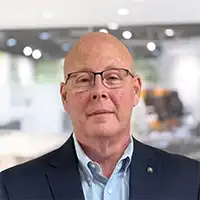
Nate Troyer
What advice would you have for, you know, an engineer today or somebody in IT that might be interested in sales? I think the best decision I ever made was to work for an MSP. Number one, the exposure that you get can skyrocket your knowledge overnight. After that, I'd say, don't say no to opportunities. Be willing to stand up and say, hey, I want something different. Mhmm. I think I could make a difference. Yeah. Welcome back to another episode of Unraveling IT, Expert Tech Talks. I'm Garrett Wiesenberg, VP of solutions consulting here at Corsica Technologies, and I'm joined here today by Nate Troyer, one of our account executives, to get a better background into, you know, how Nate got into this field, what his background kind of looks like, and then dive into what he's seeing on the front lines today. Nate, it's great to have you. Well, it's great to be here. You know, I think the the big question is, how did you get here? You know, because you've been in this specific role for a few years, but you've been in the company for, you know, I think fifteen plus now at this point. So what's your journey been like? So I started, my IT career at a a small place. You probably heard of it, Best Buy. No. I honestly started at Best Buy before there was Geek Squad. I was there for the start of Geek Squad, and I worked for a little bit there. And then I ended up wanting to kinda make a career shift and a change, and I worked for a a small MSP and found out that it was very similar to the to the role I had at Best Buy. So it was a really good fit because I'd already experienced, like, going out on on-site, doing those sorts of things and activities. Technically, I've not worked for a different MSP since because, Unpack that for me. As as happens in the MSP space sometimes. Different companies will get bought out by other companies, and that's what happened. ENS bought the company that I was working for. It's called Cutting Edge Technologies. I got folded in, started on the help desk, at ENS. Great group of people that worked there. They were highly skilled, highly skilled people, and they just kinda poured their knowledge out without really, you know, caring about keeping that to themselves. They were very they were very giving. And I just started to learn and got some certifications along the way. Have you seen my my signature in my emails? I have. And now it's like It's lengthy. And it's lengthy. But, yeah, I I I did that for a while. I worked my way up into projects. The company then, transformed into Symplexity, then became Corsica Technologies. Over that time period, I've had positions in projects, like I said, DevOps. I did a little bit of management. Did not like that. I, I like fixing problems. I don't necessarily like fixing people. I'm not very good at it. So people problems. Because you don't fix the people, but you fix their their problems. I you're probably right. And, so I went to work for another part of the organization that mainly did sales engineering. This this weirdo was running the show at the time. I think his name was Garrett Wiesenberg. Yes. So I so I went to work, with you. I got a lot of good understanding. The idea was since I've been a part of supporting the product that we offered, I would be good at at least designing around that product. And then I was actually approached by Brian Harmison, our CEO, and asked, hey, do you want to, like, sell this? Sell the product? And I went, no. That was my original response is no. Why was it no? I think it was no because I had very little, like, say real sales experience. Best Buy was sales experience, but not like It's transactional sales. It's transactional. It's transactional. It's transactional. It's transactional. It's transactional. It's transactional. It's transactional. It's transactional. It's transactional. It's transactional. It's transactional. It's transactional. It's transactional. It's transactional. It's transactional or, you know, longer sales cycles. I mean, at Best Buy, I have to imagine people were walking in and saying, I want this computer. And you were like, here you go. Which is probably why I have a better personality from working at Best Buy than if I had not worked there. So, essentially, I just kind of thought about that. And and the idea that he had proposed was you've been so integral in actually building the product, our managed services product over the years. You're the perfect person who knows how it works and and knows what we can accomplish. Seeing that, seeing how adaptable we are Mhmm. How we can solve problems very quickly. Like, if we don't offer something, we figure it out very quickly, and we can get it to market. I would say I would say faster than I've I've seen anything else. I mean, I I love the culture here. Mhmm. So would you say that of all the roles you've held in the past, that the one you're currently in is the one that, you know, suits you the most or or that you enjoy the most? I think that this role right now is the most interesting role I've had. I'm still figuring it out as I go. I tend to still look at things the way an engineer does, which is just give me your problem and I'll solve it. You know? Learning to be an active listener, learning to understand where people are coming from, I always knew that this is a service based industry, but it was more my understanding was more segmented. It was compartmentalized in, hey, this person's having a bad day. They're calling in. Their printer's broken. They they they need it fixed. So I'm being empathetic to that. The problems that you find an organization going through might be a little bit more nuanced. And so you really have to be paying attention, really active listening. So, yeah, I'd I'd say that it's the most fulfilling role I've had so far. Really? Definitely. Yes. So you've obviously had a bit of a lead up or, you know, an ease into the account executive role here and into sales as a whole because you you went to solutions engineering and and did some of the presales technical. So you kinda got familiar with the sales cycle. What advice would you have for, you know, an engineer today or somebody in IT that might be interested in sales? What steps could they be taking today to get into that field? I think the best decision I ever made was to work for an MSP, number one. The exposure that you get can skyrocket your knowledge Mhmm. In the IT field overnight. Yep. You know, something's always happened. There's always work to do. After that, I'd say, I learned very quickly to also don't say no. You know, I didn't wanna learn remote desktop services. I had no desire to do any of that, but as I got more exposure to it and got better at it, I became the person that was needed during that time period. I mean, this we're talking about, like, 2013, 2014. And I became that guy who was just fixing that all the time because it was highly needed and desirable. Yeah. So don't say no. Don't say no to opportunities. Keep making the best of each role that you're in, and each job and task that you're given. Try to make the best of it. And then it also say there's a a healthy amount of be willing to stand up and say, hey, I want something different. Mhmm. I would rather do this. I think I could make a difference. Yeah. But start with just saying yes. Because I guarantee you, at least this was true for me, always saying, hey, I'll take the three AM run to so and so's location because they have an outage. Yep. That won a lot of points in people's heads. I'm I'm sure of it. Yeah. You're a team player. Yes. You're a team player. Learn how to have a conversation with people early. Just just learn that skill. And if you're good at being able to have discussions with people and you have the IT background, sales is kind of it's an easy transition. It's just hard to get over the the hump of, hey, you know, I made such and such amount of money. Yeah. This is high risk high reward, but a lot of people do it. Yeah. So that's the that's the advice I'd give. Okay. And, you know, I think that's a great segue kind of into the the next topic, Nate, which is, you know, what are you seeing on the the front lines today? We've talked about your career, how you've moved from, you know, entry level to, you know, projects and and different roles throughout your career. But today, you're in in sales. And so you meet with our clients or prospective clients day in, day out. What are some consistent themes or or trends that you're hearing from those organizations? I think it really depends on size. But one of the one of the biggest ones that I'm noticing right now is there seems to be an awakening. They're suddenly starting to realize that maybe it's not best to have full time employees doing doing advanced level things. Mhmm. I think the era of, you know, hiring a system engineer for a 500 person company Yeah. Is going the way of the dodo. Okay. Why is that? Well, what a system engineer wants to do is in the title. Mhmm. Wants to engineer things. And once you have engineered a solution and you don't touch it, they tend to just run. Yeah. And if I'm a system engineer and I'm sitting in my office all day, and I've never had any of this exposure, what am I gonna do to prove my value after this has been installed? Mhmm. I would do what a lot of engineers do, which is either make themselves visible in the office, fixing problems, Right? Which I would argue means that you're not doing your job, sends the wrong signals. If I am doing my job, you should not see me. Mhmm. If somebody were were to hire me as a system engineer, I'd say don't hire anybody else. Farm out your cybersecurity security because I don't wanna be here 24/7/365. Well, you you can't be. I mean I can't be. Yeah. I actually can't be. And I will just take care of the five hundred users. One really good system admin or system engineer can support up to five hundred users because, one, those people worked in the industry long enough that they're not gonna want to keep fixing Debbie's printer. Mhmm. They're gonna find the answer to that problem. Yep. You know? And they also know that if they don't touch anything, it's not gonna break. What happens though is as human beings, we wanna develop our skill sets, so what we tend to do is we start tinkering. Mhmm. It's not nefarious. It's not malicious. It's just we start tinkering, and that's when things start breaking. And that's when you can actually start fixing them, and you can show, like, look at this. Yeah. Organizations are realizing that. And they're going like, am I spending my dollars wisely? I actually think that when it comes to mid market organizations, you're you're probably at the point where you should at least have one person who can be at the water cooler. They're there making sure that there is some form of support that's readily available that can have a presence, and then farm out the advanced level stuff to people who, you know, have those skill sets. That's just kinda my philosophy on it. I'm not trying to rag on system engineering. It's the same for network engineers, security architect. I mean, any of those types of of roles. But, you know, it brings up a good question. So are clients more focused on security, IT, cost cutting, budgeting? I mean, what what are you seeing right now? Obviously, there's a lot of trepidation around the tariffs that are going on, uncertainty in the markets. You know? That's a that's a big It's a big question. It's a it's a really big question. It's a little bit of all those columns mixed together, but I think the one that kinda bubbles to the surface, there's more risk now than there ever was. Cybersecurity events happen, and the fallout from those is gigantic for some reason. Material. It's very material. And every company wants to be as secure as they possibly can be. Money is the resource that's the issue. If you go out and and you try to man a sock, an actual sock for your organization, something like 560-some thousand dollars. Well, depending on the size. Right? And, like, the amount of I think I think when we ran the numbers, if you, like, hired a a director from America, but everybody else is, like, Eastern Europe, Southeast Asia, the the places where you could get the best bang for your buck, right, it was still that expensive. That's including the tooling. That's where we come in. Like Mhmm. We're for the price of a person, usually, you know, or maybe a fully loaded employee, we can give you an entire team and the tool sets to do it. We will provide the human capital. We will provide the the applications and the controls that will secure you, and we'll man those. We'll configure them, which is another, like, soft cost. You have to configure these things. You have to maintain Yep. All these solutions. I think when you start really looking at that and and seeing how expensive it gets, farming that out makes a lot more sense. And, actually, for the system engineers and the system admins out in the world, it makes a lot of sense to work at an MSP. Mhmm. I think that's where the market's going. Yeah. I think that's where it's gonna end up at for people in IT because I've already seen what's happened when cybersecurity became a big deal. Mister guy who knows about active directory and exchange and all that stuff and all the DB stuff, that kinda went by the wayside. Mhmm. Like, they were devalued almost overnight. And I think the best way for for those individuals to succeed in the market is to come and work for an MSP because they're gonna get tons of exposure to the newest, the latest things, and things breaking and figuring out why they broke and the what and the hows behind it. If you're out there, you're thinking about making a change, it'd be a good idea to look at an MSP. Okay. So what are some misconceptions that you've run into with with clients and their view of of a managed services IT model? It's kind of all over the board. My favorite clients are are clients that have been around the block a little bit. I love talking to IT directors and CFOs that have some tenure Mhmm. Because they get it. They get what they're buying. Yep. You know? Is an MSP gonna give the same level of service for a help desk, right Yep. That Bill, who works at your organization, can do? No. Probably not. Yep. Right? Like, because Bill's there all the time. We're remote. We have to send someone on-site. There's a delay. Yep. They know they're not buying that. It's an expectation setting, you know, activity. It might take a little longer for Joanie to have her printer fixed. Right? But what I'm getting is when Joanie clicks on something that she shouldn't, I've got people there who are gonna fix that problem and keep me safe. Mhmm. And I'd rather have that than, you know, 20% faster, resolution to Joanie's problem. So you're saying the the misconception is that the experience from an MSP versus your internal staff to IT team, however large that might be, is going to vary. People think what they're buying is they're buying the same level of support that they currently have. It's a different model. Yeah. It prioritizes different things. Mhmm. The priorities become the risk to your business of a cybersecurity event. Yeah. So, you know, I I think I maybe only have two more questions for you. But what's one thing you wish more clients understood about what we do? We don't do magic. We don't do magic. Like, it's very similar to any other service based industry. It just seems like it's magic and mysticism going on, when really, you know, it's the same reason why you don't bury your own fiber lines and connect up to the Internet. Right? Like Yeah. This is a service. We're trying to give you unmetered support. So you're going to pay for that, but you're not gonna pay as much as you would have if you were the one bearing the lines, buying the routers, taking all that connectivity. You're paying a a fraction of that. Most of our clients are very sophisticated. But every once in a while though, you do get a prospect that doesn't really understand what they're asking for, and we talk through that. But that's probably the biggest thing. Go into it understanding that you're you're buying a service, and you have to put a value onto those things. Yeah. And come prepared to to speak about, this is the problem I'm having. How are you gonna solve it? We are going to be deploying solutions into your organization, applications that are gonna go onto your devices, that are gonna protect you from any malicious activity. We're also gonna deploy a product that will allow us to have remote control because one of the things that we do here that a lot of MSSPs don't actually do is they don't remediate the cybersecurity events. It's on the IT team at the organization to do that. Gotcha. So you're saying the alert comes in, the cyber provider reviews the alert, and if an action needs to be taken, they pass it off to, you know, whatever IT team is handling support. Yep. Okay. We're gonna document your your environment so that if you have your own IT guy and he leaves, well, there goes all that tribal knowledge. That just went out the door. You know? So we document all that information so it doesn't matter who leaves. Yeah. And then we're going to improve your cybersecurity posture, give you some resources like our our consultants that will come in and help and help drive business growth through IT. Understanding the company is what we're really driving at here. Good MSPs don't care as much about, like, slinging IT and cybersecurity Yep. Solutions. They care about business growth. If the business grows, it's more profitable for everybody. Right? So we're multifaceted. We're not really doing magic. If you had an an IT team, it would look very similar to us, except they wouldn't be moving around that much. They wouldn't be doing a whole lot. They'd just be sitting there all day. We don't have that luxury. No. We don't. That's for sure. There's always something going on. That's the beauty of MSP. Right? Yes. I've learned so much in my first year working at MSP that it just it was it was mind boggling. Yeah. Same. My final question. If you could give one piece of advice to, you know, business leaders out there, what would it be? IT can be one of those places that most leaders don't wanna look at because as long as it's not breaking all the time, who cares? And what they do in in what I've seen at least, and this is why I think this awakening is happening is they're starting to look at the bill, and they're going, is there a better way of of accomplishing this? Yeah. That better way does exist. It absolutely exists. What you will be giving up is, you know, time to resolution might be a little different. What you're gonna be gaining is you're gonna be getting stability across your organization. You're obviously gonna be saving money because you may not have a couple of full time employees that you thought were vital before who are not actually vital. And I think at the end of the day, you'll find that you will be more secure, stable, and you'll you'll save a lot of money in the process. Well, yeah. Appreciate the insight, Nate. I know that it's a bit of a a switch up. Normally, you're interviewing me, and I'm subject matter expert. Like, my perspective on things. But Which, again, disclaimer. These are my perspectives. Appreciate you coming in and and, you know, talking through this with me and, you know, hope you have a great rest of your day. Thank you. It's a pleasure being here.
Nate Troyer is based out of Fort Wayne, Indiana, where he was born and raised. Nate attended Ivy Tech Community College for his higher education.
In his spare time, Nate loves spending time with his wife and family. Additionally, he enjoys learning about the ins and outs of the video game industry, specifically its history, backroom deals, and development of its constantly growing tech.
Managed Cybersecurity (MSSP) with 24/7/365 availability to monitor systems, to back up data, to deter major events, and to respond and to recover from incidents
Security Assessments to identify your risks and recommend best-in-class solutions
Event management to respond to incidents, contain breaches, and to recover from major security events fast and effectively
Consultations to provide you with an ongoing cybersecurity strategy commensurate with the latest threat analysis
Consultations to understand your current data and/or EDI landscape and what challenges you face
Implementations + services and support of new solutions for data integration and EDI
Services and support for existing data integration and/or EDI solutions
Connect your essential systems with Corsica Integration Cloud. Our platform connects any data source to any other, giving you cohesive data across operations.
Consultations to help you look ahead and build a comprehensive technology roadmap
Cloud Managed Services to improve efficiency and productivity of your IT infrastructure
24/7/365 Managed IT Support including virtual and on-site assistance
VOIP service, from consultation to solution recommendation, to implementation and to ongoing management
Consultations or immersion engagements to assess your goals, technology, and systems so we can customize a roadmap to digital transformation
Custom development of software, web, and mobile applications–both internal and customer-facing
ERP selection and project management services
Cloud virtualization to simplify database migration, improve data protection, and ensure business continuity
Systems and IT modernization by updating and integrating technologies, as well as establishing a plan to efficiently make future replacements and improvements
Technology integrations that are time-consuming and demand specialized knowledge
System and security posture assessments to learn how applications are performing, identify weaknesses, and outline steps for improvement
Compliance gap assessments to see where to make business systems run more efficiently, effectively, and meet compliance requirements
Penetration and wireless breach testing (pentest) exposes vulnerabilities so you can proactively address risks and qualify for your cyber insurance coverage
Security training to help keep your teams up to date on compliance, data safety, cybersecurity dangers and best practices
Cloud migrations including microsoft 365 and other time-intensive migration projectsIT
We’ll respond within 1 business day, or you can grab time on our calendar.